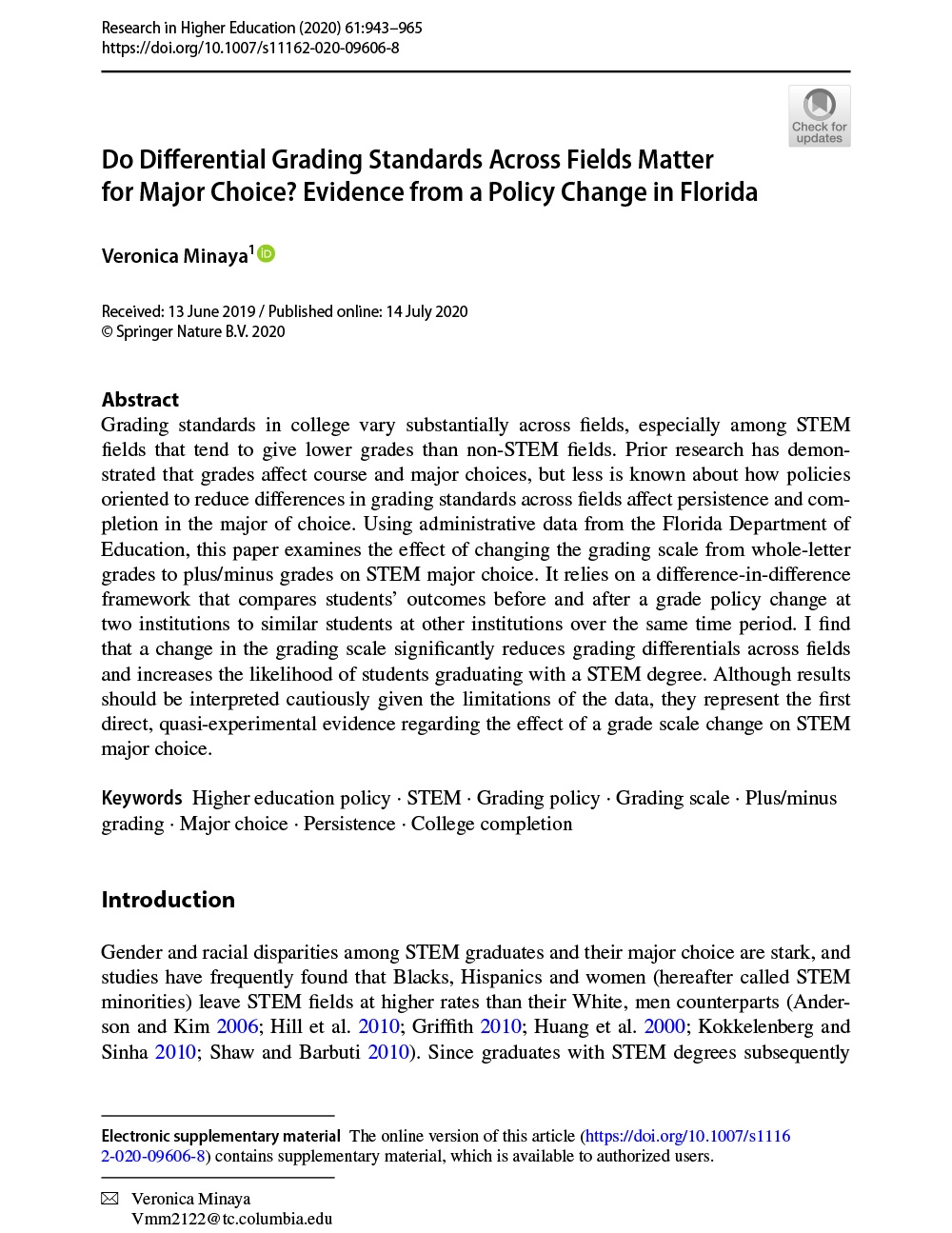
Using administrative data from Florida, this article examines the effect of changing the grading scale from whole-letter grades to plus/minus grades on STEM major choice.
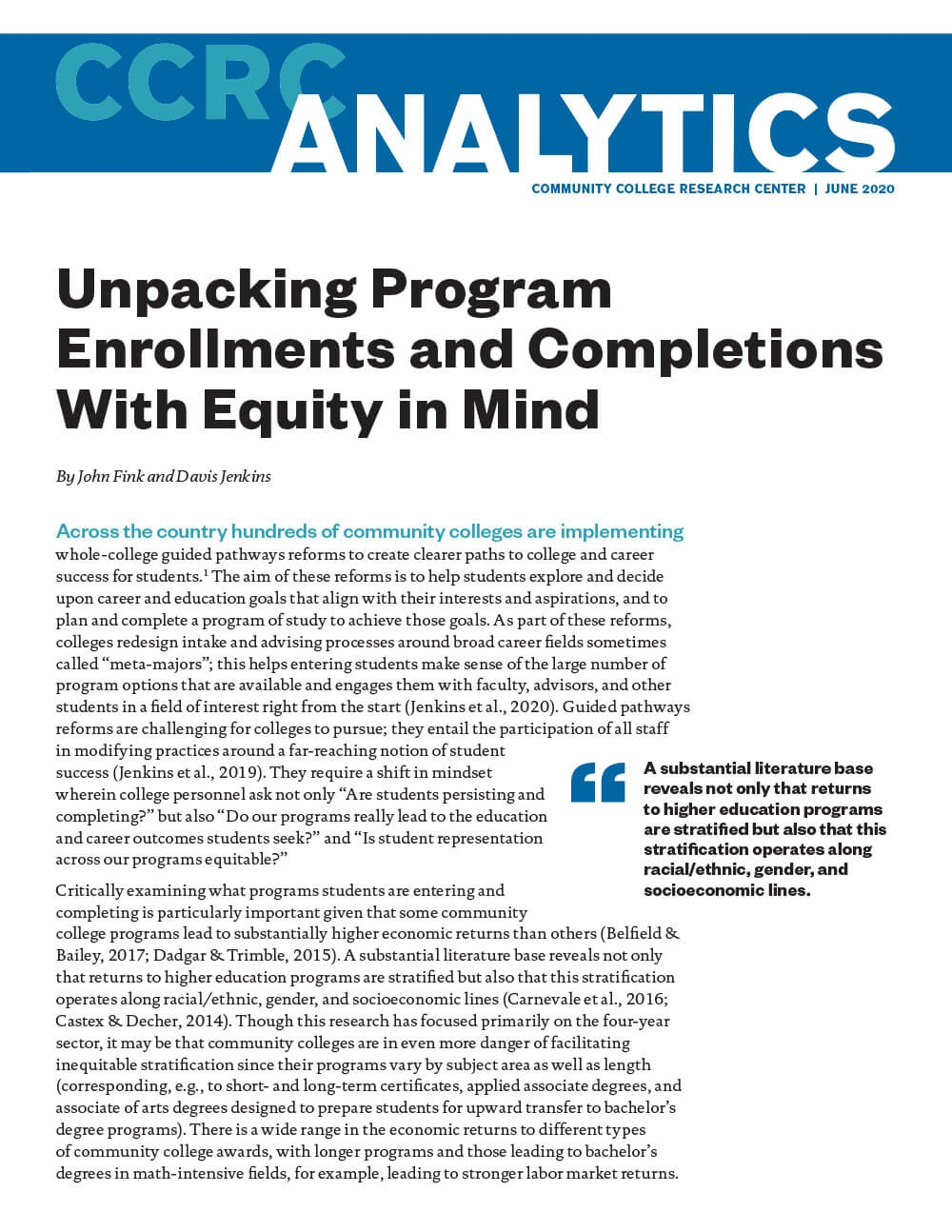
This guide presents a set of example data analyses colleges can replicate to examine whether underserved groups of students are equitably represented in programs that lead to higher opportunity outcomes for employment and/or baccalaureate transfer.
Davis JenkinsHana LahrLauren PellegrinoElizabeth M. KopkoSarah Griffin
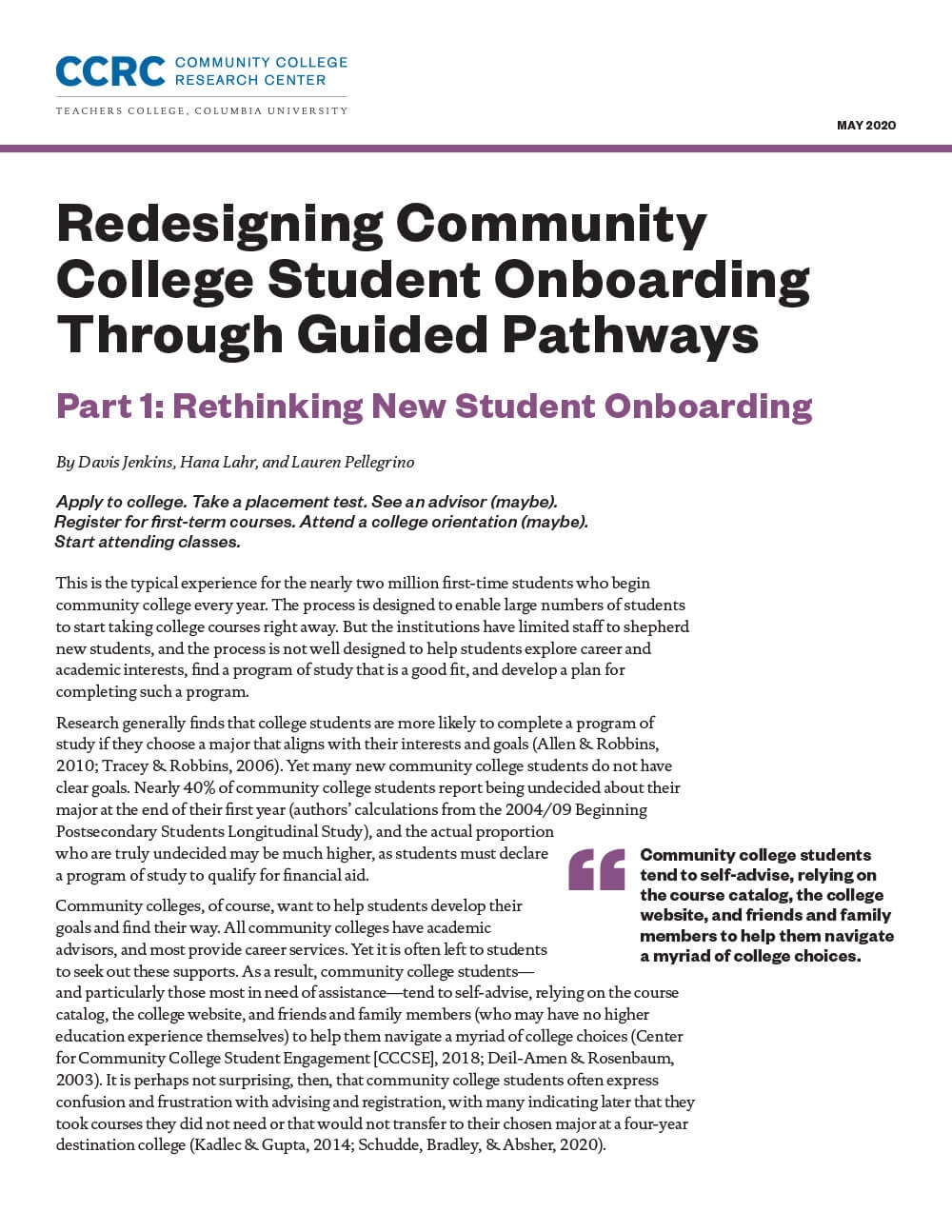
This practitioner packet provides guidance to colleges seeking to redesign their new student onboarding practices to better help students explore, choose, and plan a program of study best suited to their interests and aspirations.
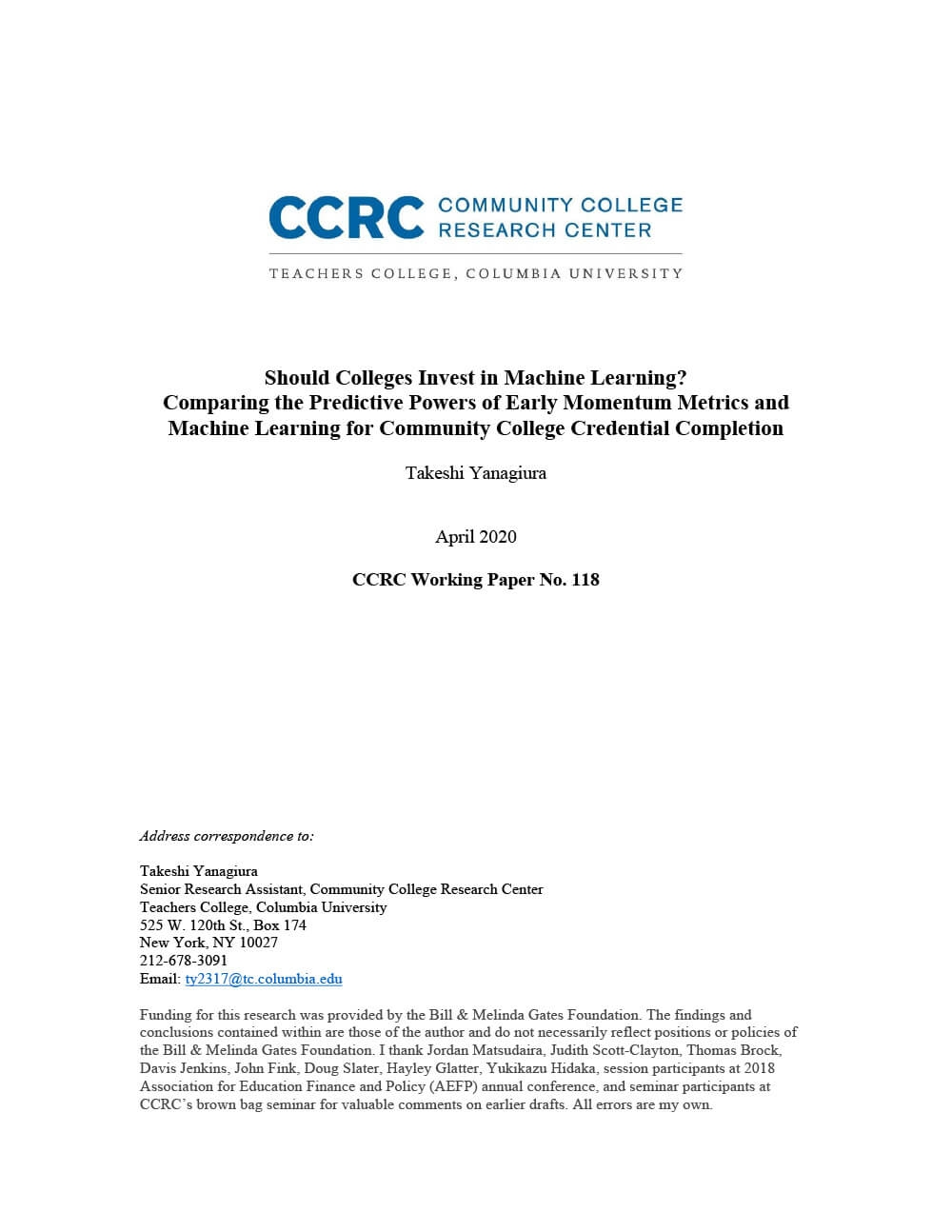
This study compares the out-of-sample predictive power of early momentum metrics—13 near-term success measures suggested by the literature—with that of metrics from machine-learning-based models that employ approximately 500 predictors for community college credential completion.
In this short essay, Shanna Jaggars (coauthor of Redesigning America's Community Colleges) and Amanda Folk (head of teaching and learning at the Ohio State Libraries) discuss how librarians' expertise could be harnessed to support guided pathways reforms.
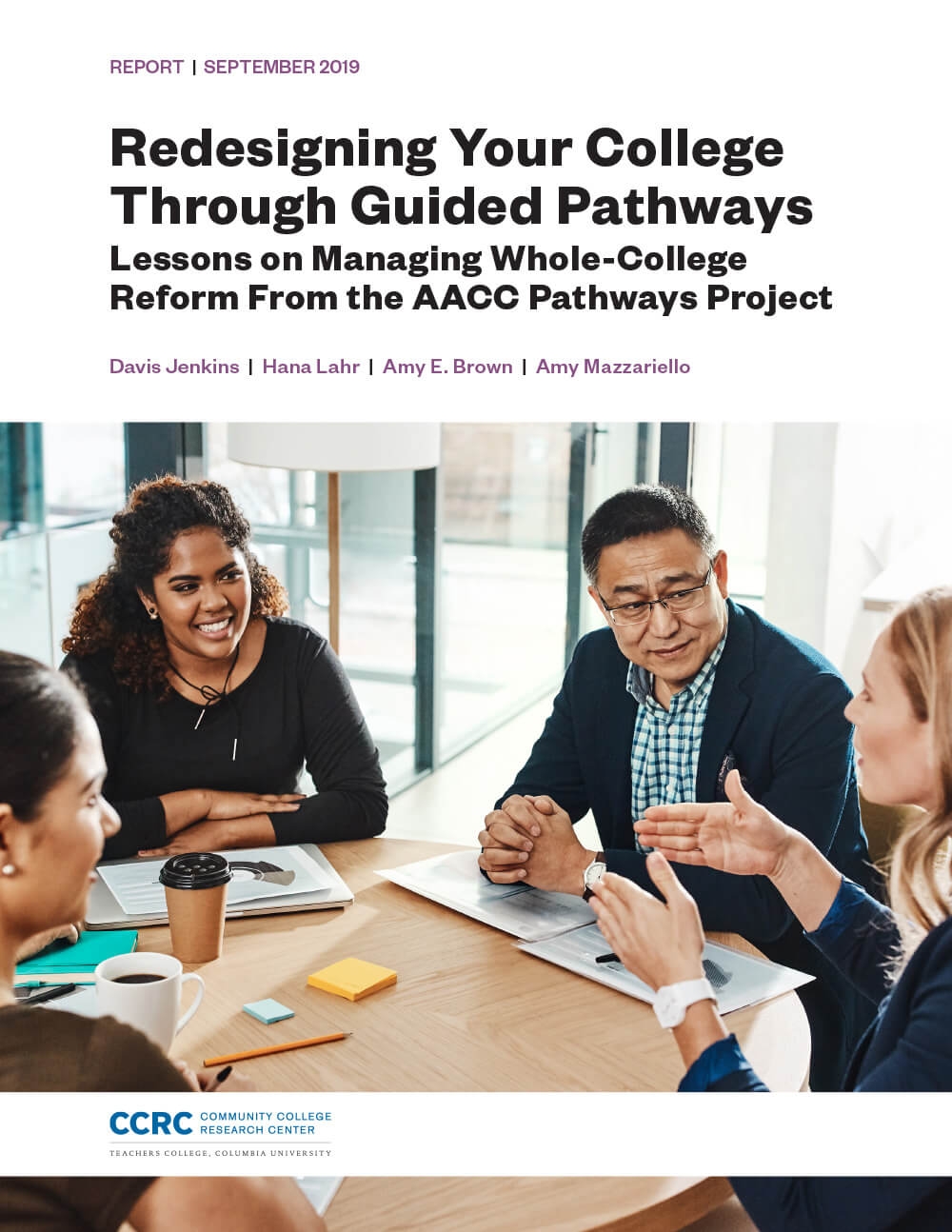
This report and the five case studies that accompany it describe how institutions are managing the broad-based transformation of programs, student services, and related support systems using the guided pathways model.
In this brief, the authors examine how well nine measures of students’ progress in their first year predict student completion in subsequent years, and thus how suitable these early momentum metrics are as leading indicators of the effectiveness of institutional reforms.
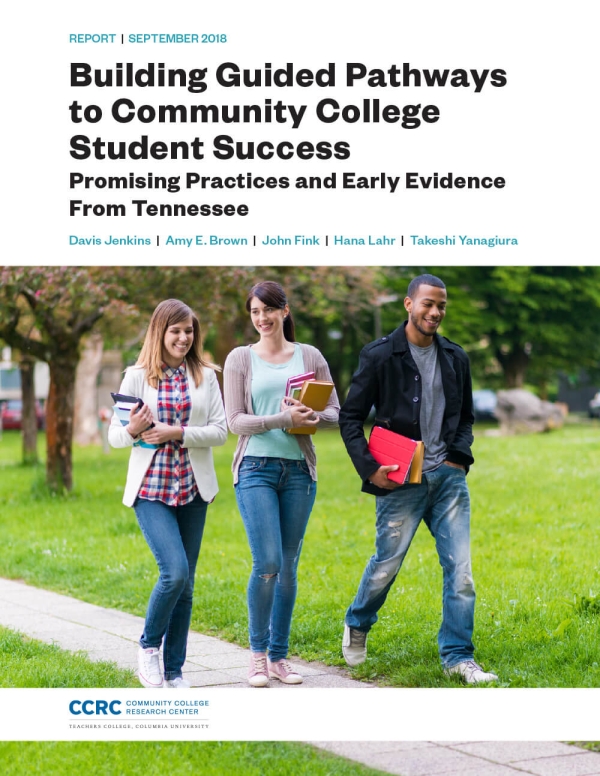
Davis JenkinsAmy E. BrownJohn FinkHana LahrTakeshi Yanagiura
This report describes the guided pathways reforms taking place at the 13 community colleges in the Tennessee Board of Regents, along with promising trends in first-year momentum among entering students.
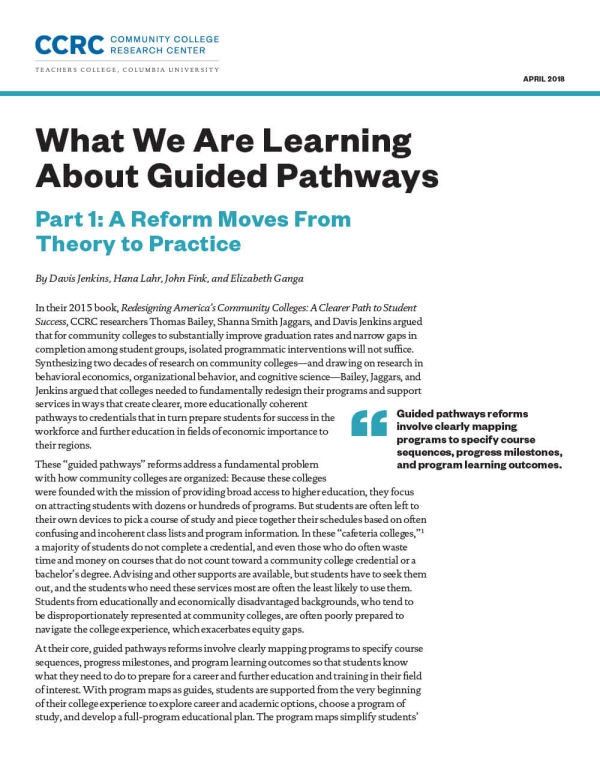
This practitioner packet describes the guided pathways reform model; presents case studies of how colleges are approaching key pathways practices, with promising evidence on student success from early adopters; and outlines steps and a timeline for implementing guided pathways reforms.
Elizabeth M. KopkoMarisol RamosMelinda Mechur Karp
This paper describes how degree-seeking students at the City Colleges of Chicago make choices about their programs in their first year of enrollment, focusing especially on how they interact with advisors and how they use college-based resources in program selection and program planning.