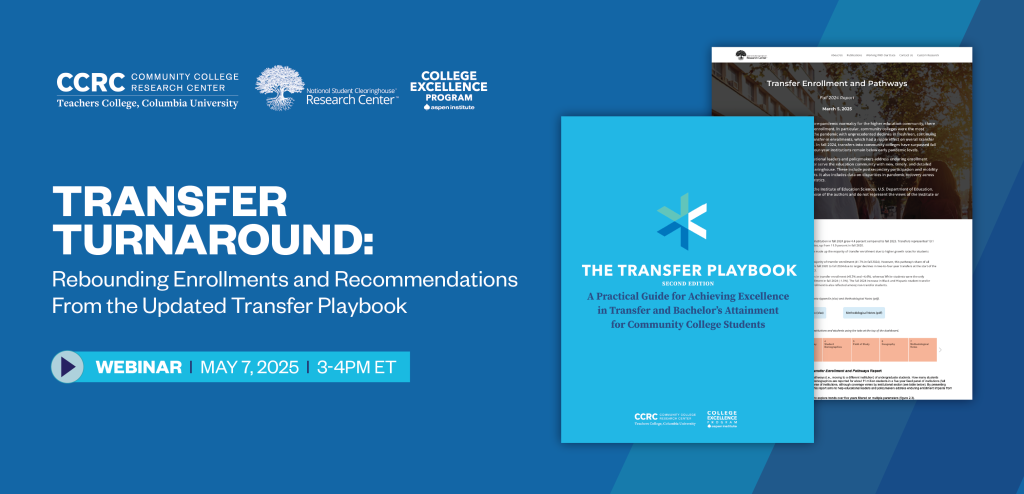
In a recent webinar, researchers from CCRC, the National Student Clearinghouse Research Center, and the Aspen Institute’s College Excellence Program explored data and findings on transfer enrollment, access, and strategies to improve the transfer process.
Five years after the onset of the pandemic, students enrolled in online classes are still reporting a lack of social connection and feelings of isolation. CCRC researcher Akilah Thompson shares strategies in this blog post to help students feel more engaged, confident, and human in their online courses.
This blog post introduces the dual enrollment pathways scale of adoption assessment, a self-assessment tool for colleges and college–K-12 partnerships to compare their current dual enrollment practices against the DEEP framework.
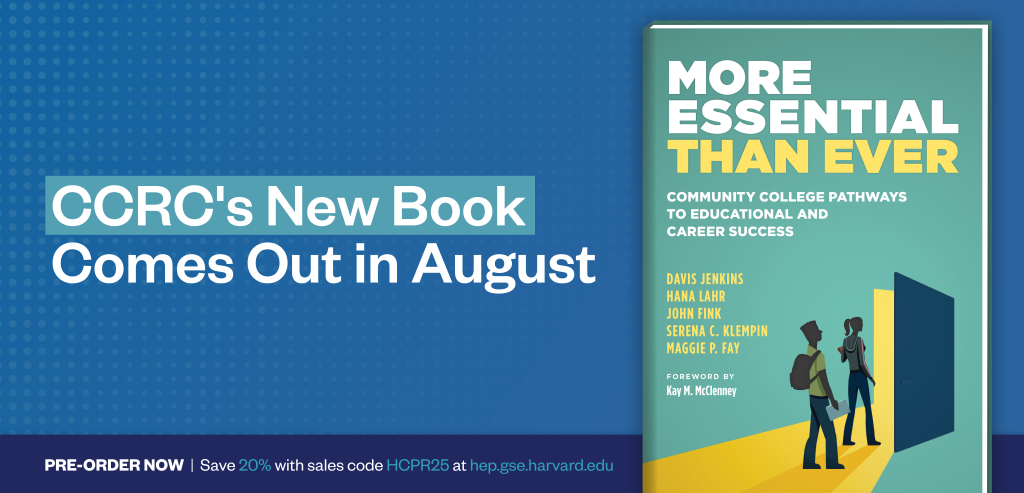
A forthcoming book to be published in August 2025 takes stock of what we have learned over nearly a decade of research on the guided pathways model for whole-college transformation. This blog post, the first in a series, features insights from the book, including practical guidance for community colleges on meeting the challenges they face today.
A new CCRC report examines data on what degrees and certificates community colleges nationally are awarding and which of those programs are more likely to enable students to secure good jobs directly or transfer efficiently to a bachelor’s degree program in students’ major fields of interest.
CCRC's forthcoming book features a chapter on the critical role of teaching and learning in community college efforts to strengthen pathways to post-completion success. This blog post, the third in a series, offers takeaways from the chapter on how community colleges can ensure students gain the practical skills needed for success in employment and future education.
To reimagine program onboarding, colleges must shift its purpose from a process focused on acquainting students with campus policies and procedures to one that helps students choose an initial direction and develop an academic plan to meet their goals.
The authors of CCRC's forthcoming book offer strategies to increase community college completion rates by ensuring students are on paths to fulfill academic requirements in as little time and at as little cost as possible.
A new approach to dual enrollment encourages community colleges to partner with middle and high schools to motivate and prepare underserved students to pursue a postsecondary degree in a field of interest directly after high school.
One challenge to improving community college student success is how to scale and sustain systemic reforms across multiple institutions. In this blog post, the authors of CCRC's forthcoming book share lessons from their evaluation of statewide guided pathways reforms and offer strategies for putting next-frontier innovations into practice.
On March 7, CCRC was notified by the U.S. Department of Education that four of its grants from the Institute of Education Sciences had been terminated. In this blog post, Thomas Brock describes the scope of the cancelled projects and the effects of the federal funding loss.
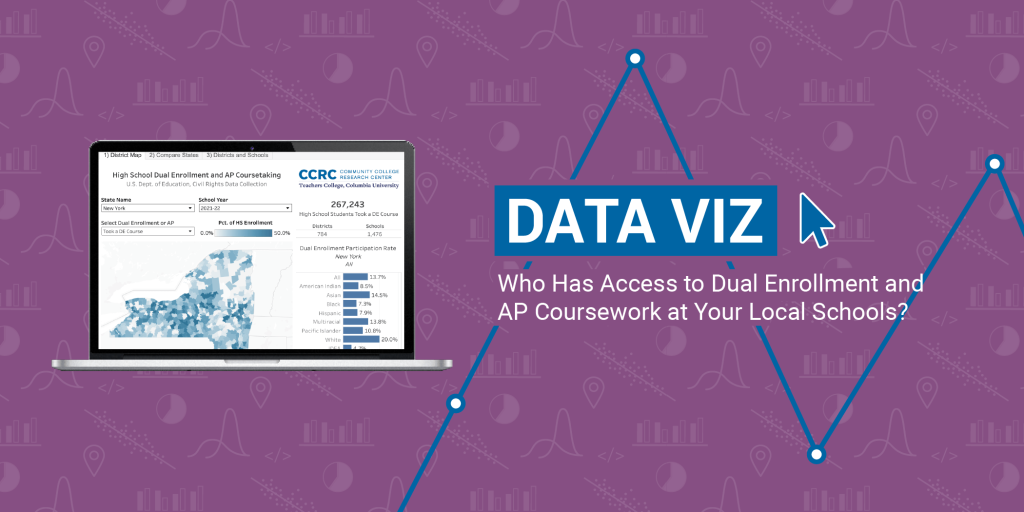
An interactive dashboard draws on multiple years of CRDC data to provide a school- and district-level view of dual enrollment and Advanced Placement access, disaggregated by students’ race/ethnicity, English language learner status, and disability status. The dashboard is meant to help college and K-12 educators as they strengthen and expand dual enrollment programs.
CCRC's latest data tool shows community college awards by field alongside associated earnings and awardee demographics at national, state, and institutional levels. This dashboard can help community colleges and state systems consider which of their programs put students on paths to post-completion success.
To help community colleges retool their workforce programs to adapt to changes in the energy sector, it’s important to understand what colleges are already doing. CCRC researchers spoke with Allison Moe, a research project manager at the National Renewable Energy Laboratory, about connecting with community and technical colleges and the potential impacts of a new CCRC study.
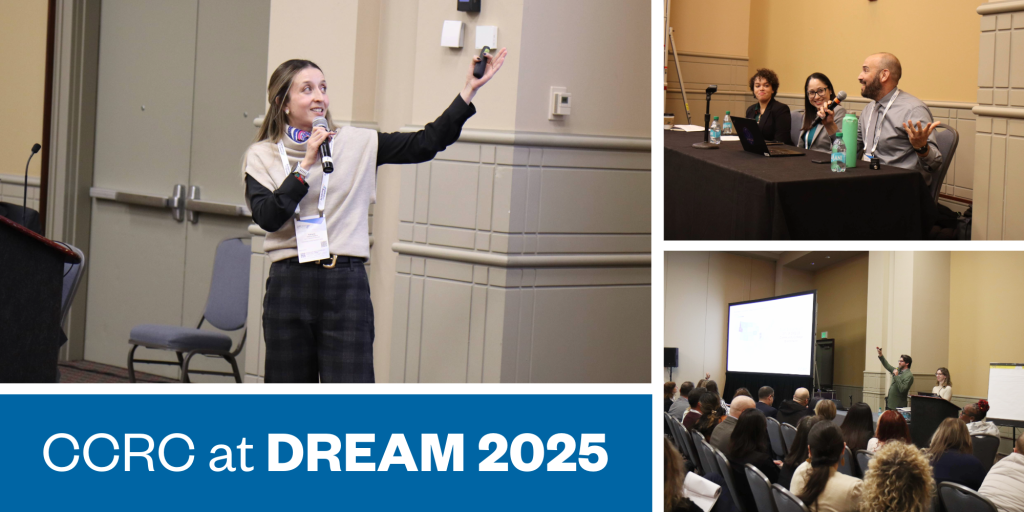
In five sessions at DREAM, CCRC researchers and partners explained how they are working with colleges, state systems, and other organizations on the next generation of student success research.
Search the CCRC blog
Explore trends in community college outcomes with our interactive data visualizations.